



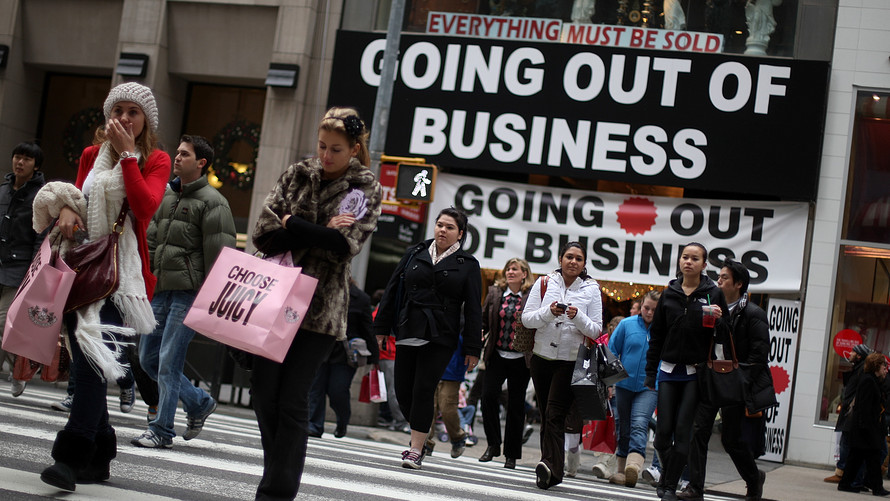
Is Macy’s Closing?
No, Macy’s isn’t closing completely but they are shutting down 100 or more locations nationwide.
Is Victoria’s Secret Going Out of Business?
No, but they are making some changes, like getting rid of their swimwear and ditching the iconic catalog.
Is BCBGMAXAZRIA Closing?
Sort of. They have filed for bankruptcy and closed all of their retail locations. Their website is still running and will remain online as their primary focus, according to Cosmopolitan.
Are JCPenny’s, KMart or Sears Closing?
No, but they are closing 10% or more of their stores.
Is The Limited Going Out of Business?
Yes, they have filed bankruptcy, closed their stores and their website says it is temporarily offline.
Is Ivanka Trump Brand Going Out of Business?
Nope, still going strong, according to Fox News.
It’s hard not to notice that the fashion industry is struggling. 2016 has been a difficult year for many retailers, like Aeropostale and American Apparel, who had to file for bankruptcy, or stores like Macy’s and Children’s Place, who shut down dozens of their locations across the United States. Last month, I wrote about Nasty Gal, a trendy and fast-growing online retailer, who was sold to it’s overseas rival, Boohoo, following a bankruptcy. And just a few days later came the news that BCBGMAXAZRIA also filed Chapter 11 and is closing all of its U.S. retail stores to focus more on online sales. So many well-known apparel companies are reporting no growth or declining sales.
So why is this happening?
7 reason why fashion industry isn’t performing well:

1. Not understanding the modern consumer.
Millennials (those born between 1980 and mid 2000s) are a force to be reckoned with. They now compose a third of the U.S. population and are the largest population cohort in our country. These young adults in their 20s and 30s are now out of college, entering the career world, creating families and becoming valuable consumers. They are very diverse, well-educated, tech savvy and highly selective. They are the primary targets for retailers, who are failing to understand them, to capture their interest and to attract their spending power.
Meanwhile, online companies are looking for innovative ways to capture market share and increase conversion. For example, read about this creative venture that is using artificial intelligence to dress their shoppers.
I will write more on what retailers can do to attract shoppers in today’s fast-paced, technology-laced world – follow me to stay in the loop!
2. Economy.
With the policy uncertainty index climbing over the past few years, consumers and businesses have a hard time making plans and commitments. The last thing you are buying when you are not sure about the future is a new trendy skirt.
3. Sales.
Every major holiday, you best believe there will be sales happening – at every.single.store. And to compete with each others, shops begin their sales earlier (like, on they day of Thanksgiving, before the turkey is eaten) and compete to see who will discount deeper. While shoppers rejoice, stores are doing each other a disservice. Consumers are becoming so used to sales that they simply refuse to shop full price, driving profit margins down.
Even sale days aren’t performing as well as they used to. Shoppers no longer need to wait for a holiday to hit the stores – they know where to find discounts online any day of the week. In fact, Forbes survey showed that 47% of shoppers were planning to skip Black Friday last year. “The year the retailers opened on Thanksgiving, they killed it once and for all,” said Paula Rosenblum, managing partner at RSR Research in a comment to Forbes.
4. Amazon.
Amazon is predicted to displace Macy’s as the number one apparel retailer this year. It is already way ahead of any other retailers, taking up lion’s share of the online sales. Almost everyone I know has an Amazon Prime account. Its enormous size, wide assortment, brilliant logistics and constant innovation make it hard to compete with. In an effort to not fall behind, Walmart made a deal last year to acquire Jet.com, Amazon’s emerging alternative. Walmart has been facing its own share of struggles, but perhaps this move can help them turn things around and cut themselves a piece of the online sales pie.
5. Malls.
Malls are declining across the countries and it’s not hard to see why. According to financial analyst Tom Kniffen in a comment to CNBC, a third of retail malls are due to close in the upcoming years. Simply put, we have too much retail space per-capita and it’s not paying for itself. Additionally, malls simply don’t offer enough attraction to create a profitable foot traffic.
6. Lease.
Many retailers, like Abercrombie & Fitch, are reporting a high percentage of their store leases coming up for renewal. For stores that are not meeting goals, this means potential shut down.
7. Tax.
Boarder tax, looming in the future, would create a sad prognosis for stores like the already-struggling GAP, Old Navy and Urban Outfitters. Lower corporate taxes will not be enough to offset the new import expenses, and this will certainly drive even more stores out of business.
What can stores do to succeed in today’s economy?
Follow me not to miss the upcoming post!
Image source: Getty Images

Let's face it, Retail is in trouble. Online shopping is killing everything. How can you even compete with all the overhead stores have. As good as smart phones and computers are at making our lives easier, they also killing every store and mall across America along with many other businesses and jobs. Shopping for everything and anything has become so simple you can lie on your back staring at your phone and have something delivered to your door within a day or two or three. Fashion is a little tricky because you usually want to try things on. But many times they dont have your size or the item you may be looking for. The retailers would have been better better off just investing in the delivery companies like FedEx for example. FIT grad 83